12.01.2015

Angles, Elements and Filters


When shooting my first roll of film, I thought my meter was broken, so I tried using the sunny 16 rule. Unfortunately all my photos were completely underexposed.

I shot my second roll if film still not knowing where my meter was.  However, I had a better grasp of the sunny 16 rule and shot my roll outside.  As a result, I got a few good negatives from this roll.

Before I shot my third roll, I realized that when trying to meter, I was looking at the focus arrows instead of the meter arrows. Once I found the meter arrows, my negatives were much better exposed.  I went to some new, interesting locations when shooting this roll, and as a result, most of my matted prints are from these negatives.

Motion and Triptychs Inspiration

Panning
Donnell Gumiran

Slow Motion
Koci

Amazing wildlife - Owl photo #owls:
Freeze Action
Erika Kaisersot

Dramatic Tornadoes of Light Photographed by Martin Kimbell tornadoes light painting light:
Total Motion
Martin Kimbell


Effective Use of Camera Shake

Surreal photography by Paolo Barzman
More Effective Use of Camera Shake
Paolo Barzman

Same Action, Opposite Movements

Amazing black and white street photography by Sung Lee
Panning
Sung Lee


Freeze Action
Bruno Long

I think the panning photograph is most expressive, as the streaked background allows the biker to be the focus subject of the photo. Furthermore, the streaked background expresses speed, something experienced while biking.  Also, the high contrast in value allows for a darker, more dramatic mood.

Triptychs

Hengki Lee

Barry Flanagan

Triptych: A picture containing three pictures placed next to each other.  These pictures often connect in some way and work better together than as a standalone picture.

11.02.2015

Composition Hunt- Elements of Design

Parallel Lines
George Barr
georgebarr.com

Jagged Lines
Jamey Stillings
jameystillings.com

Texture- Smooth
Alan Ross
alanrossphotography.com


Texture- Bumpy
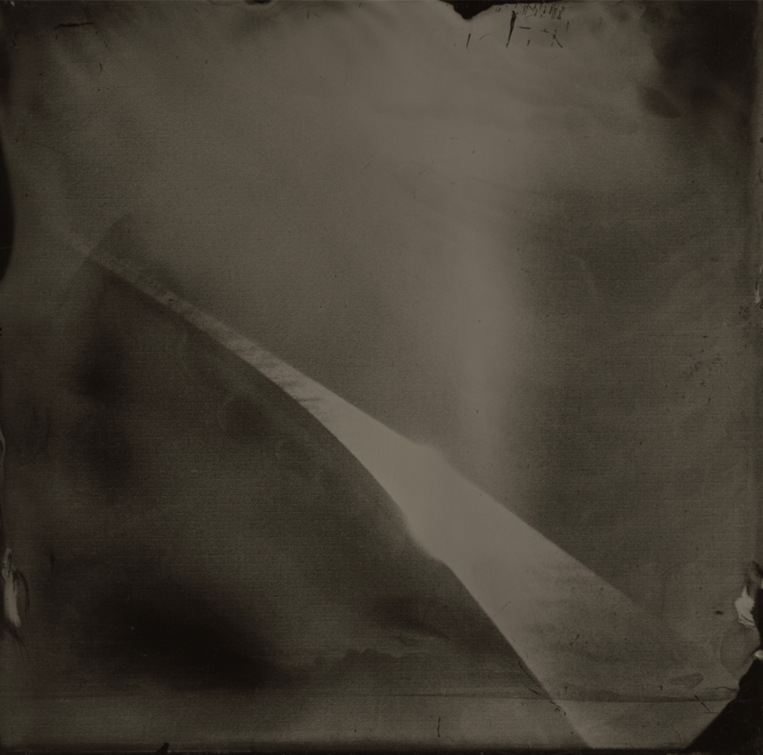
Meghann Riepenhoff
photolucida.org

Texture- Rough
David Robin
davidrobin.com

Shape- Geometric
Domonic F Ciancibelli
Etherton Gallery

Shape- Organic
Alan Ross
alanrossphotography.com

Negative Space
George Barr
georgebarr.com

Space- Distance
Bob Avakian
photolucida.org

Value- High Contrast
Larry Blackwood
larryblackwood.com

Value- Low Contrast
Bill Vaccaro
billvaccaro.com

10.13.2015

Project One: Early Process


I have always been fascinated by space and astrophotography.  Since this project requires camera-less photography, I couldn't point my camera towards the sky, and was thus forced to think about space in a new a way.  I used objects such as bouncy balls and sand to emulate planets and stars.  I also created photo collages by blending multiple photos (found online) on top of each other in Photoshop.  I then made photocopies of those collages and made them into photograms.  I chose the photogram process to produce strong blacks and whites and (mostly) high contrast prints.

Below are a few tests I made before starting the project.

Cyanotype

Photogram- Objects

Photogram- Tone Reversal

Photogram- Magazine Collage #1

Photogram- Magazine Collage #2

Chemigram #1

Chemigram #2

Chemigram #3

Pinhole

10.06.2015

Photogram Inspiration

When researching, I came across some interesting photograms.  Some consist of objects, some consist of images, and others a mix of images and objects.  These photograms caught my eye for their texture and motion.  The first photogram below has a lot of grey tones, while the second one has much less.

Adam Fuss. From the series My Ghost. 1999. Gelatine silver print photogram:
Adam Fuss

Way of Words - Motiongrams
David Fried

9.20.2015

Old Process/New Artist

The Chlorophyll Process

The Chlorophyll Process was first used by Heather Ackroyd and Dan Harvey.  This is a very organic process, as it uses sunlight and the pigment found in leafs.  The sunlight bleaches a positive onto a leaf, resulting in stunning images that take on an interesting shape and texture.

The Process:
1. Choose a leaf.
-Broad and flat leaves are preferable.
-Cut the stem down low and at an angle, keeping as much of it as possible.
-Put the steam in a vase to keep the leaf from wilting.

2. Choose an image and create the positive/transparency.
-Choose a positive with high contrast to improve the clarity of the final print.

3. Arrange the positive on top of the leaf, then put a sheet of glass over the arrangement.
-Arrange the positive and leaf so the stem is sticking out of the glass sheet.
-Use a rubber band to secure a small bag of water to the stem.  Only do this if you want to keep the leaf from drying out.

4. Place in direct sunlight.

5. Checking and removing your print.
-After leaving the print out for at least 24 hours in direct sunlight, check if the bleaching process is transpiring.
-When the bleaching process is done, peel the off positive slowly, as the leaves can be fragile, thin and damp.

6. Preserving the Chlorophyll print.
-When not on display, press the leaf in a book away from direct sunlight.
-Another way to preserve the print is to cover it in a layer of UV stabilizer polyester resin.  This allows you to preserve the print longer while keeping it on display.

Information found at Alternative Photography.

Below is some work from contemporary photographers who use the Chlorophyll Process.


Binh Danh

Binh Danh

Binh Danh has some moving stories behinds his work.  He finds photos from the Vietnamese War and turns them into Chlorophyll prints.  His images are ghost-like and have beautiful textures.  I recommenced you check out his website and this interesting video where he explains the chlorophyll process and how his work connects to those who passed away in war.

After quite a bit of research, I think it is safe to say there aren't many contemporary photographers who practice the chlorophyll process.  This is likely do to the fact that it is difficult to preserve these fragile yet inciting prints.